
Bonta Italia Pinsa Restaurant, Shibuya
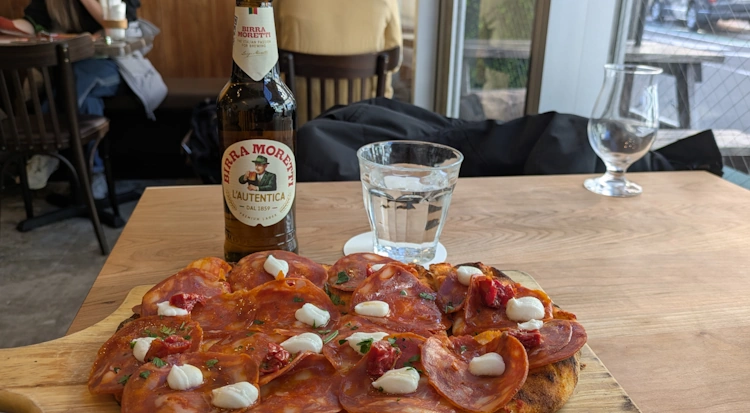
With another proud entry, we present a very unique addition to our list of pizza in Tokyo; Maybe not “pizza” (not exactly), Bonta Italia in Shibuya serves up pinsa; a fresh variant on Roman pizza. Pinsa is so very much like pizza, we are certain it belongs on our list. Bonta Italia earns not only mention, but our eager recommendation:
You gotta try the pinsa at Bonta Italia in Shibuya.

Bontà Italia is located in Shibuya, but not in the flat area near the station. The Bonta Italia restaurant is to the south of the station, in a district called Sarugakucho (the word “saru” means monkey, “gaku” is related to music). The walk from Shibuya station to Bonta is mostly uphill, but only takes about 10 minutes. The easiest way to get there is to catch a train to the Daikan-Yama Station (recommended), with a downhill stroll to the Bonta shop.

“Pinsa, what’s the deal? Same as pizza?” Yes, we say confidently. Functionally, and from a flavor profile, basically pinsa and pizza are the same food.

Down below we will share a few notes about the “inventive” history of pinsa, but for now: There are maybe three main differences between the “pinsa pizza” style and traditional pizza: 1.) The mix of flour (pinsa includes both rice and soy-based flour), 2.) a more hydrated dough (more water in the pinsa dough), and 3.) a lower cooking temperature (300°C for pinsa, versus 500°C for Napoletana pizza).
The unique ingredients and the complex process of making the dough result in a light and airy dough that’s crispy on the outside and soft on the inside. The dough is made with 80% water (80% hydration dough) and very little salt, which are mixed together with sourdough starter and then left to leaven for 48-72 hours.”
— Ratton Pantry

That’s enough nerding out about the dough, let’s take a look at what’s on the menu at Bonta.
 While there are straight-forward classics like the Marinara and Margherita, Bonta Italia has some more attention-grabbing options to consider:
Salmone Pinsa: Anchovy Butter, Smoked Salmon, Mozzarella Di Bufala, Dill Sauce
— From the Bonta Italia Pizza menu
The Salmon Pinsa looks like a “lox and bagel”-inspired masterpiece. That may be a trendy “cosmopolitan” spin on pizza, but it is a trendy slice I am eager to try.
While I have never had the Salmon, as of this review I have eaten several of these Bonta Italia “pizzas.” On my first visit, we ordered two pinsa; a salami pinsa (which is no longer on the menu) and the tuna pinsa.
Piccante Pinsa: Tomato base, Salame Piccante, Ricotta, Semi-dried Tomatoes.
— From the menu at Bonta Italia

(I have never seen the phrase “semi-dried tomatoes” before.)
The Piccante (which seems to have been remodeled into the Diavola – on the current menu) was a spicy pizza, with the ricotta cheese doing a fantastic job of bringing in a cool, soothing refreshing contrast. (I learned how ricotta is a perfect complement to spicy at Azzurri Pizzeria in Kobe). The “semi-dried” tomatoes add to the chorus with that bright, sweet, acidity tomato taste.
I didn’t know much about pinsa-style at the time, but I took some more notes that day:
There is less oil and grease in a pinsa than either a gourmet Napoletana (where they pour olive oil over the pizza) or a NYC slice (which may have oil in the dough). The crust is lighter, and the meal comes off much less heavy.
— From my notes
The pinsa crust was wonderful; less chewy than classic Naples-style dough, more like something from a bakery; softer toward the center, with the edges offering that dry, crispy, and slightly-burnt flavor.
Our second pinsa was the tuna.
Tonno Pinsa: Tomato Base, Mozzarella, Tuna, Olives, Capers, Rucola, and Anchovies
— From the Bonta Italia menu
I wanted to try that Tonno pizza, in part as I have an appreciation for “Japanese seafood pizzas” (great one at Massimotavio Pizzeria, here in Tokyo), and have been making a particular effort at exploring the subset of “tuna pizzas in Japan” (which are mostly “meh,” but Tokyo’s Il Lupone makes an incredible Tonno pizza).
The tuna pinsa at Bonta Italia had a layer of flaked tuna (from a can), combined with arugula, to create an austere, mature, “tuna salad” taste. It was good, I liked it, but I wouldn’t order it again.
(If I were to order the Bonta’s Tonno pinsa again, I’d double the olives and capers. And it was missing some heat. I looked around for red chili flakes – there were none. I found some chili oil on the table next to mine, and it made the tuna pinsa much better.)
While the Piccante was very pizza like, the Tonno was more like a specialty, open-faced sandwich.
I really like this place. So much so, a few weeks after my first visit, I was back to Shibuya’s Bonta Italia pizza for another tour of their menu.
On my second visit, a woman next to me ordered the mortadella with the pistachio sauce; that pizza looks just amazing.
Mortadella Pinsa: Mortadella, Fior Do Latte, Pistacchio, Provola
— From the pizza menu at Bonta Italia in Shibuya
I have not tried the Mortadella Pinsa (yet), but that pizza generates a sense of temptation that only fatty, pink, lunchmeat can inspire.
As I looked over the menu, the rather unique combination of sausage and potato pinsa caught my eye. That was so different, I wanted to try it.
Salsiccia Pinsa: Fior Di Latte, Salsiccia, Roasted Potato
— From the pinsa menu at Bonta Italia

My first bite of the Sausage Potato Pinsa was all potato flavor; small cubes of potato (“patato”), crispy at the edges, then soft and yielding. That potato taste mixed with fresh herbs; was that rosemary? Yes, rosemary (I asked). Then, the sausage flavor following; a stronger taste, but in smaller proportions, complimenting rather than leading the overall taste.
And then – the crunch of the crust. The pinsa crust deserves it’s own mention:
72 hour natural leavening. 80% hydration. Wheat/soy/rice flour. Original sourdough. Low fat/calories. Low carbs/sugar.
— From the Pinsa description at Bonta Italia
The pinsa crust is light; soft in the middle, but enthusiastically crunchy (“scrocchiarella,” as the Italians say) as you work your way to the edges. Due to the difference of the flour in the dough, the crunch exceeds that of a typically pizza crust.
The lightness of the crust carried that potato/sausage combination away from something that might be heavy (like a casserole), and made it almost more like “breakfast scramble pastry” (not all the way to pastry, but in that direction).
So; does it pass the Pizza Czar Pizza Test?

It sure does. That crispy-cracker exterior, and smaller square slices, makes pinsa easy to pick up and to eat by hand.
If there was anything “oily” about this pinsa, it was that the taste made me think of buttered toast.
On both occasions when I was at Bonta, I was there for lunch. As part of their “lunch set,” Bonta includes some sides: an Italian vegetable soup, with a variety of diced vegetables, flavors of tomato and zucchini; and a simple salad with tomatoes, balsamic and nuts (roasted pecan).

A beautiful meal.
From my research, there is some inclination that the pinsa preparation includes a “par bake” process:
It’s common practice to ‘parbake’ the dough so it’s set. Then it’s taken out of the oven and garnished with everything from tomato sauce to smoked salmon and baked a second time.
— Lou Tomczak via Chelsea Ritschel in The Independent
Thinking back to my first experience with the Piccante Pinsa: as it arrived, the salami on top hadn’t been cut. They seem to cut the pinsa first (bread and cheese), then add the salami on top.
So back to the topic of pinsa vs pizza? What is the deal there again?
The first time I ever saw the word “pinsa” was in an article on the Michelin website comparing Napoletana Pizza to Pizza Romana:
[T]he ‘pinsa romana’. Oval or rectangular in shape, it is crispy on the edges and soft on the inside, and is prepared using a dough made with different flours: wheat, soy, rice, and sourdough. The name… comes from the Latin ‘pinsere’, meaning ‘to spread out.’
— Michelin Guide
At the time, I was interested in these oval and rectangular pizzas. Years ago I had [A] Pizza in Osaka; a very simple pizza in the Roman style. Not long after my first time at Bonta, I had very high-end Roman-style pizza at Tokyo’s Pizza Bar on 38th (which they called “pizza alla pala”).
From an earlier version of Bonta’s menu, there is a description in Japanese that translates to:
Pinsa Romana: From ancient Rome in the 6th century.
Is this an ancient recipe? I had heard that also, from other sources.
There are several stories around that “pinsa” is some ancient version of pizza, perhaps dating back something like 2000 years. In contrast, there is also an interview where pizza chef Corrado Di Marco (rumored to have the trademark on the concept “pinsa romana”) says he invented the term “pinsa” for marketing purposes, and that he also invented the rumors of its “history.” Bonta’s old menu references “Dimarco,” and it could be that that there is no such thing as a “historical” pinsa, and that Bonta is just passing along Di Marco’s rather “inventive” mythology.

One comment I found online points out that is seems very unlikely that the ancient Romans were using a soy-based flour. (Hmmm, good point.) We also notice the claims of being “low gluten,” which fit within the anti-gluten leanings of modern food-marketing trends circa 2010.
It seems reasonable to consider pinsa a sort of stage-name for Pizza Romana. The inclusion of soy in the dough may be about cost savings (?), and the refrain of a reduction or removal of fat may be in contrast not to Napoletana dough (which has no oil), but particularly to other Romana-style pizza doughs (which add olive oil to the dough mixture).

Even if the name “pinsa” is marketing fluff, the product at Bonta Italia is wonderful from concept to execution. Good times, great food.
Bonta Italia creates a wonderful pizza experience in Tokyo. The atmosphere feels like an upscale café that works as a causal, but proper restaurant. There is table service (the service is excellent), along with a comfortable, relaxed, neighborly feel.

As Bonta Italia is embedded in the Sarugakucho neighborhood, a visit to the shop offers a high-end experience of back-street Tokyo; a beautiful location, less teenager-y, and much less of “tourist magnet” than other parts of Shibuya. Bonta attracts a clientele that is a mix of internationals (an English-speaking Asian couple at one of the outdoor tables) and somewhat upscale, local Japanese (next to me were two late 30s women with well-groomed child-dogs on their laps).

Yes, dogs. So many dogs; a sure sign you’re seeing a local spot.
Tokyo is an absolutely fantastic pizza town. While the biggest names are in the Naples tradition, this town has Chicago pizza (DevilCraft), Detroit Pizza (Pizzakaya), NYC-style slices in Tokyo (“The Pizza” being my personal favorite), and now… Pinsa Pizza.
In a country with an almost slavish devotion to the Neapolitan style, this not-pizza pinsa is both delicious and a refreshing option.
Highly recommended.

For more Tokyo Pizza see:
— Marumo Pizza restaurant in Ebisu, Tokyo
— The Pizza Bar at the Mandarin Oriental Hotel in Chuo City, Tokyo
— PST (Pizza Studio Tamaki) Rippongi, Minato City, Tokyo
— Massimotavio Pizza in Suginami City, Tokyo
— Savoy Pizza in Asabujuban, Minato City, Tokyo
— Sabasu Pizza in Akasaka, Tokyo
— Pizza Strada in Azabujuban, Minato City, Tokyo
— Devil Craft Pizza Kanda, in Chuo City, and DevilCraft Gotanda, in Shinagawa Tokyo
— Shibuya pizza at Kevelos, in Tokyo
— Frey’s Famous Pizza in Rippongi, Tokyo
— Pizzakaya in Minato City, Tokyo
— Steampunk pizza restaurant Seirinkan in Meguro, Tokyo
— Peppe’s Napoli Sta Ca Pizza in Komazawa in Setagaya, Tokyo
— Risto Pizza in Azabudai Hills Tower Plaza, Minato City, Tokyo
— Butcher Republic pizza in Ebisu, Tokyo
Pizza Slices in Tokyo
— Rocco’s Pizza in Ojihoncho, Kita City, Tokyo
— Pizza slices in Tokyo at New York Pizza Tonyz in Koto City, Tokyo
— Nim’s Pizza slices in Asabujuban in Minato City, Tokyo
— Pizza Slice in Shibuya, Cat Street location